Diatom Enterprises is a software development company founded in Vancouver in 2004 and headquartered in Riga, Latvia. We build custom software solutions for companies in a wide variety of industries, mainly in North America and Western Europe.
In the 2000s, web technology did not allow us to make the user interface convenient enough for working with content. Users worked on both Mac and Windows desktop computers and used a number of different browsers. In one of our projects for developing an online Training system for a Californian client, we suffered for a long time with the old Ext JS framework in order to ensure adequate display and printing with various types of content.
The advent of Flex Builder, later renamed Flash Builder, was a step-change, a real revolution and breakthrough for us.
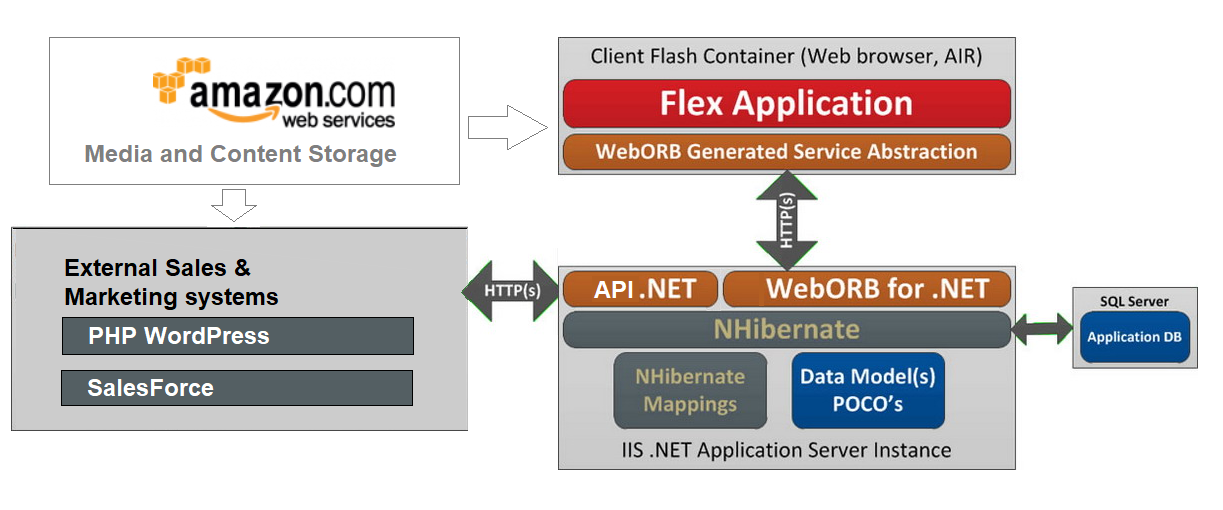
This allowed us to create great things, being extremely user friendly to work with content, create multisided courses, training plans, create online exam systems, that all performed smoothly on different platforms.
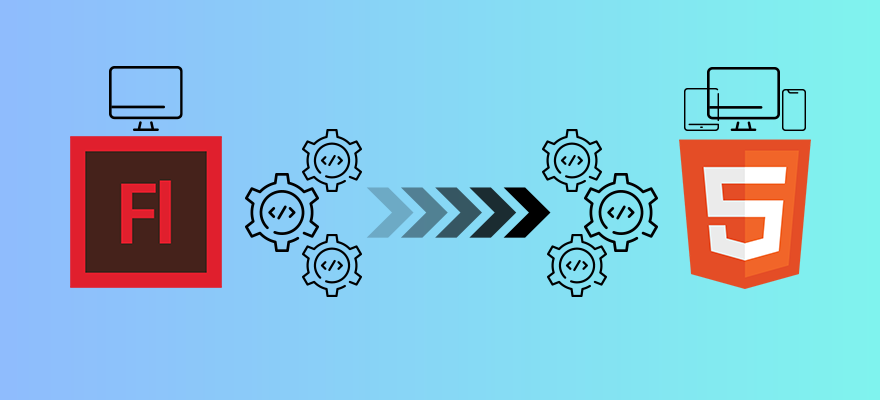
However, like a bolt from the blue, news came that Flash would not run on iPad tablets. Since that time, Diatom Enterprises gained its first commercial experience in migrating a system developed in Flex Builder into HTML5 technology.
The real challenge was that at that time about 1,000 clients used our system written in Flash. Each had multiple students, sometimes numbering in the hundreds, which in total amounted to 10k simultaneous online sessions. It was necessary to migrate from Flash to HTML5 flawlessly, without interrupting the sessions.
It was successfully completed, and you can see the story about that migration here…
Or, in short, we managed to migrate a project developed using .NET/WebOrb/Flash into NodeJS/AngularJS/HTML5.
Since then, year on year, many companies have stopped developing with Flash, and all new projects have been implemented using technologies such as Angular, React, Vue etc.
We have been constantly approached for consultations by companies that faced similar questions. For example, in 2015, a German company requested our consultancy services on how to migrate a system written using Flex Builder to manage electronic equipment control systems at one of the largest European airports, to HTML5 and AngularJS. Our company developed a plan and methodology to ensure this migration.
In 2017, a UK-based company approached us, which at the time had about 500 training courses and training material for kindergarten children made using Flash. They also needed to migrate from Flash to HTML5.
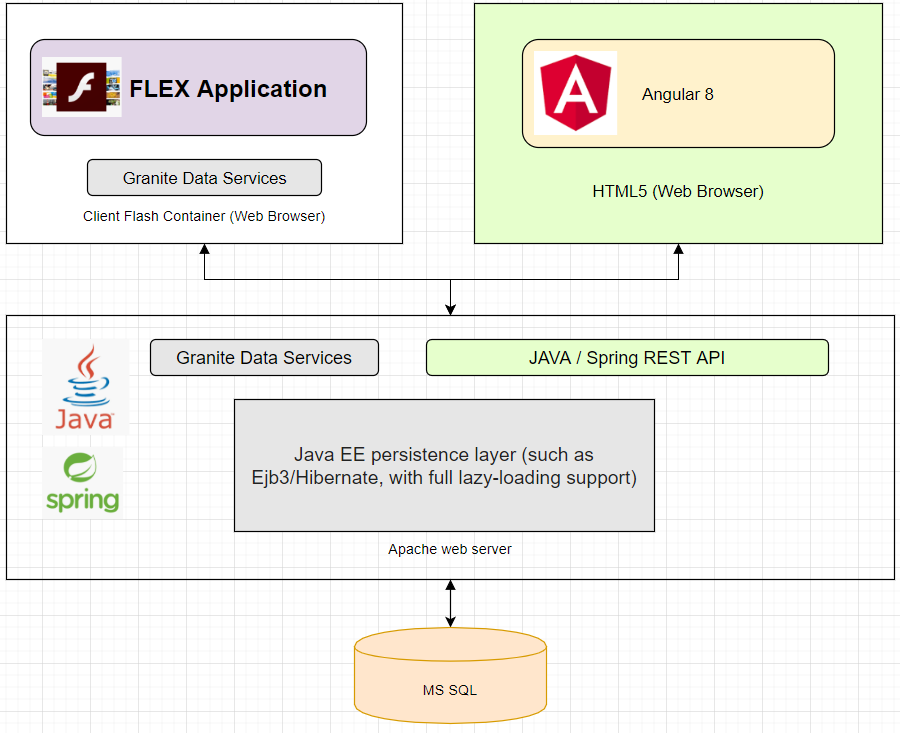
A team of 10 developers from Diatom Enterprises worked on the migration of the electronic Mark Book system for Canadian students from Java/Granite/Flash to an HTML5/Angular platform. As in other cases, this task requires an agile, project-managed approach, since the legacy Flash system is used in real time by clients and users of the system. The total number of students is about 10,000. Our programmers need to ensure a smooth migration from the old system to the new one, so that users do not lose their data, can work on both systems simultaneously for some time, and find the design of the legacy Flash system carried over to the HTML5 system.
Update (November 2026): Adobe stopped supporting Flash Player on 31 December 2020 and has blocked Flash content from running since 12 January 2021, so any system still built on Flash or Flex needs a Flash to HTML5 migration. Official AngularJS support also ended at the end of 2021, so systems once moved to AngularJS are now due for a move to Angular or another current framework.
If you were not able to find an exact example of your system among the above ones, please do not hesitate and contact us for advice. We will be happy to help, guide and counsel you to a successful solution to your needs!
Thanks for taking the time to see how Diatom Enterprises can help you realize your journey!
Diatom Enterprises team.