

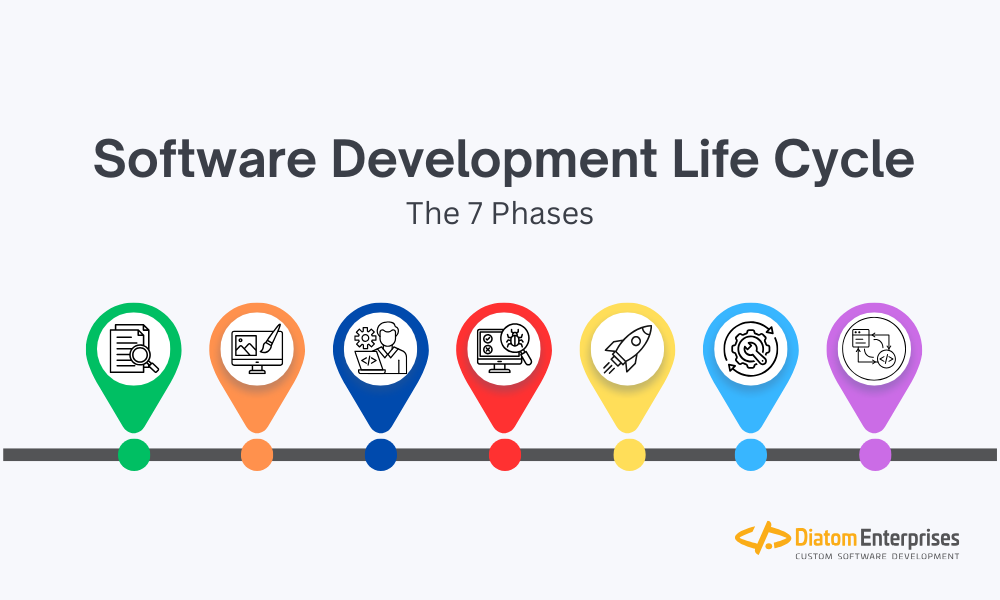
Building powerful, custom software without a roadmap is like navigating a ship in a storm without a compass. You might eventually reach land, but the journey will be chaotic, expensive, and far from your intended destination. In the world of technology, that roadmap is the Software Development Life Cycle (SDLC). It’s the proven blueprint that transforms a brilliant idea into a high-performing, reliable application.
What is Software Development Life Cycle?
At its core, the software development lifecycle definition is simple: it is a structured process that outlines the key stages involved in creating high-quality software. But what does SDLC stand for? The SDLC full form is Software Development Life Cycle. To define SDLC clearly, it is a management framework that provides a clear blueprint for planning, building, testing, and deploying a digital product. Ultimately, the primary goal of the software development life cycle (SDLC) is to deliver a reliable system that meets or exceeds customer expectations in a timely, cost-effective manner.
Moving from theory to execution requires looking at how these concepts function in real-world engineering. When exploring what SDLC is in practice, the true value of modern SDLC software development life cycle methodologies lies in how they connect raw code to broader business objectives. If we define SDLC life cycle success by its outcomes, this framework transitions from a mere list of technical tasks into an indispensable strategy for controlling project scope, reducing overhead, and scaling engineering resources.
The primary purpose of the life cycle of SDLC is to impose order on the inherent complexity of software development. When you describe SDLC to project teams, the core focus is breaking down the full development lifecycle into manageable phases so you gain immense control and visibility. What SDLC means in software engineering is a structured approach to minimize risks, eliminate guesswork, and ensure that the final product meets required quality standards and business objectives. It provides a common language and clear expectations for everyone involved, from stakeholders and project managers to developers and QA engineers. This entire process is a core component of the broader system development life cycle, which encompasses the creation of all IT systems, including hardware and facilities.
This structured methodology is also a key part of a larger concept known as Application Lifecycle Management (ALM). While the SDLC lifecycle focuses specifically on the development process, ALM SDLC covers the entire lifespan of an application, from its initial conception and governance through to its eventual retirement. Think of the complete software development life cycle as the critical “building” phase within the larger “city planning” of ALM. It ensures the construction is sound, efficient, and up to code.
While there are various SDLC models – like Agile, Waterfall, and Spiral – that dictate how the SDLC cycle is executed, they all share a common set of fundamental phases. These models are different strategies for navigating the same core journey. For example, the rigid waterfall model in software engineering treats each phase as a distinct, sequential step, whereas Agile models navigate SDLC cycles in rapid, iterative sprints. Understanding the core phases is the first and most critical step, as they represent the universal building blocks of any successful software project.
The 7 Core SDLC Phases Explained
Every software project, whether it’s a complex enterprise application or a sleek mobile app, progresses through a series of well-defined stages. What are the stages in SDLC life cycle management? Understanding what are the 7 phases of SDLC ensures that nothing is left to chance, providing a clear path from an initial idea to a fully functional product. Let’s break down each phase of SDLC execution.
Phase 1: Planning and Requirement Analysis
This is the foundational phase where the entire project takes shape. It begins with gathering detailed requirements from all stakeholders – clients, market analysts, and end-users. The goal is to understand the “what” and “why” of the project. What problem will this software solve? Who is the target audience? What features are essential? During this stage, we conduct feasibility studies to analyze the technical and economic viability of the project, define the scope, and identify potential risks. The key deliverable is a Software Requirement Specification (SRS) document, which acts as the definitive guide for the entire team.
Phase 2: Design
Once the requirements are clearly defined, the design phase begins. Here, we translate the SRS document into a technical blueprint. This phase is typically divided into two parts: High-Level Design (HLD) and Low-Level Design (LLD). The HLD outlines the overall system architecture, defining the main components, modules, and their interactions. It’s the architectural sketch of the application. The LLD then dives deeper, detailing the logic for each module, database schemas, and user interface (UI) layouts. This is where a conceptual software development life cycle diagram of SDLC life cycle structures starts to become a concrete plan, outlining the very bones of the software.
Phase 3: Development (Coding)
This is the phase where the design blueprint is brought to life. Developers take the design documents and begin writing the actual code, building the software piece by piece. This is often the longest phase of the SDLC. Whether building web systems or executing an SDLC life cycle in Java for enterprise backends, our development teams work with a wide array of modern technologies to build robust and scalable solutions, adhering to established coding standards and best practices. The project is broken down into modules or units, and developers work on their assigned components. The outcome of this phase is the first functional version of the software.
Phase 4: Testing
No software is complete without rigorous testing. Once the code is written, it moves to the Quality Assurance (QA) team. This phase is dedicated to finding and fixing defects to ensure the application meets the specified requirements and is free of bugs. The software testing life cycle (STLC) runs in parallel here, involving various types of testing:
- Unit Testing: Testing individual components of the code.
- Integration Testing: Checking if different modules work together as expected.
- System Testing: Testing the entire application as a whole.
- User Acceptance Testing (UAT): Allowing stakeholders or end-users to test the software and provide feedback.
Continuing the Cycle: From Testing to Maintenance
The SDLC life cycle doesn’t end once the software is built and tested. The subsequent phases are just as crucial for ensuring the long-term success and value of your application. These stages transition the software from a development project into a living, breathing business tool that serves your users.
Phase 5: Deployment
After the software has passed all testing phases and receives a green light from the QA team, it’s ready for deployment. This is the process of releasing the application to the production environment, making it available to end-users. Deployment can be a complex process and is carefully planned to minimize downtime. Strategies may include a direct rollout, a phased release to a subset of users, or a parallel deployment where the new and old systems run simultaneously for a short period. The goal is a smooth and seamless transition for your users.
Phase 6: Operations & Maintenance
The journey isn’t over at launch. The maintenance phase is a continuous process that ensures the software remains effective, secure, and up-to-date. This includes monitoring system performance using tools like Grafana to track metrics, fixing bugs that are discovered by users in the live environment, and releasing patches or updates. This phase also covers enhancements, where new features are added over time to adapt to changing business needs and user feedback. Proper maintenance is key to maximizing the return on your software investment.
Phase 7: Disposal/End-of-Life
All software eventually reaches the end of its useful life. The disposal phase is the final stage, where an application is decommissioned. This might happen because it’s being replaced by a newer, more advanced system or because it’s no longer technologically or commercially viable. This phase must be managed carefully to ensure a smooth transition for users. It often involves migrating data to a new system, archiving historical data for compliance, and securely retiring the old infrastructure.
The way a team moves through these seven phases is determined by the chosen SDLC models. As mentioned, the waterfall model in software engineering requires one phase to be fully completed before the next begins, offering a rigid but predictable structure. In contrast, an Agile model will execute all these phases in miniature cycles, or “sprints,” delivering small, functional pieces of the software incrementally.
Many organizations find it helpful to visualize this entire process. A comprehensive software development life cycle pdf or visual diagram of SDLC life cycle flows can serve as an excellent reference tool for project teams, clearly illustrating the flow from one phase to the next and defining the key deliverables required at each stage.
Choosing the Right SDLC Model for Your Project
Understanding the seven phases is the “what” of software development; choosing the right SDLC model is the “how.” A modern software development life cycle often integrates continuous development and deployment practices. The model you select is the framework that guides your team through these phases, and the right choice is critical for success. It directly impacts your project’s timeline, budget, flexibility, and ability to respond to change. There is no single “best” model; the ideal choice depends entirely on the unique nature of your project.
For example, the classic waterfall model in software engineering is highly structured and sequential. It works best for projects where the requirements are crystal clear, fully documented, and unlikely to change. Its rigidity provides predictability, but it lacks the flexibility to adapt if market needs shift mid-project. On the other end of the spectrum are Agile models like Scrum and Kanban, which are iterative and incremental. They are designed to embrace change, allowing for requirements to evolve. This approach is ideal for complex projects where you need to adapt quickly and deliver value to users faster.
Ultimately, the goal is to select a methodology that aligns with your specific business objectives and the individuality of your project. Do you need speed and flexibility, or is predictability and comprehensive documentation paramount? A thorough analysis of your project’s scope, complexity, and goals will determine the most effective path forward. This is where an experienced development partner can provide immense value, helping you navigate these choices to manage risks and ensure a successful outcome.
Conclusion
The Software Development Life Cycle is more than a technical checklist; it’s a strategic business process that brings structure, clarity, and quality control to the complex task of creating software. By methodically moving through the seven core SDLC phases – Planning, Design, Development, Testing, Deployment, Maintenance, and Disposal – you transform a creative vision into a tangible, reliable, and valuable asset. Understanding this framework is the fundamental first step toward building great software that not only functions flawlessly but also achieves your strategic business goals.
Now that you understand the blueprint for exceptional software, let’s talk about building yours. At Diatom Enterprises, we specialize in guiding businesses like yours through every stage of the complete software development life cycle. Our deep expertise in Web, Mobile, and Desktop development allows us to tailor the process to your unique needs. We help you capitalize on the strength of your business’s individuality to create custom software that delivers real-world results.
Ready to start your project? Contact us today to discuss how we can bring your vision to life.
Frequently Asked Questions
What does the SDLC acronym stand for?
The SDLC acronym stands for Software Development Life Cycle (or System Development Life Cycle in broader IT management).
What is the SDLC meaning in plain terms?
The basic SDLC meaning refers to a step-by-step project management framework used by software teams to plan, design, build, test, and maintain high-quality software efficiently.
Can you explain the SDLC life cycle with examples?
To understand the SDLC life cycle with examples, consider building a web or mobile banking application:
- Planning: Deciding the application needs biometric login and account management.
- Design: Wireframing user flows and database architecture.
- Development: Writing backend services (such as implementing an SDLC life cycle in Java for secure transactions).
- Testing: Verifying security compliance and fixing code bugs.
- Deployment: Releasing the application to production cloud servers.
- Maintenance: Pushing continuous updates and monitoring performance.