
How to Choose an ERP System: A Strategic Framework for Enterprise Architecture and Cost Valuation

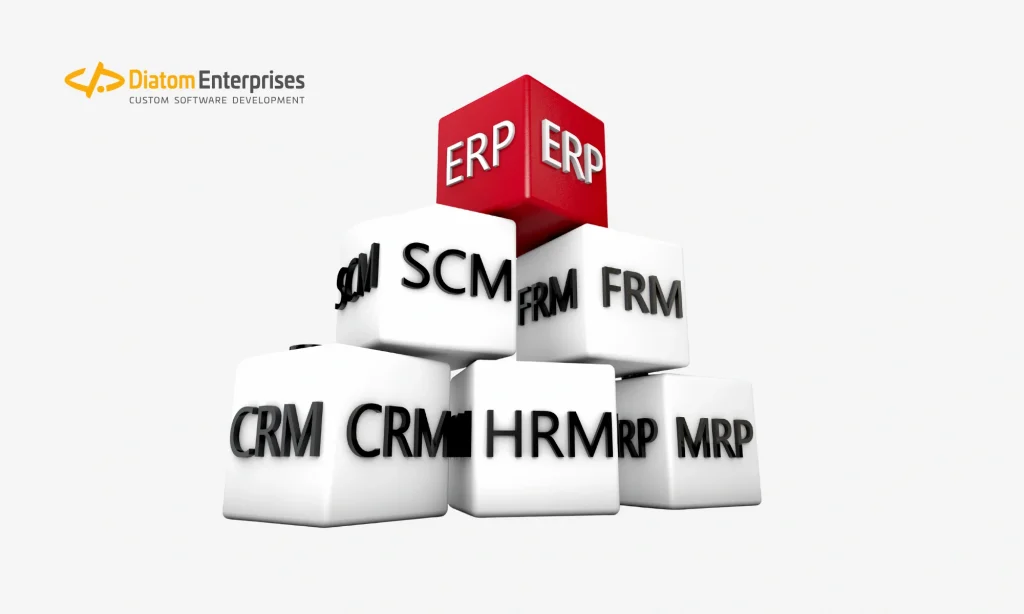
Selecting an Enterprise Resource Planning (ERP) platform is one of the most capital-intensive and operationally disruptive decisions an organization will ever make. This guide breaks down the systemic methodology required to navigate the modern ERP landscape, maps the complex realities of platform licensing, and outlines how to calculate the true lifetime cost of your deployment.
The Architectural Crossroads: Modernizing Enterprise Infrastructure
At a certain scale, disjointed software applications stop being minor daily inconveniences and start actively throttling organizational growth. When your inventory database cannot communicate with your general ledger, or when customer fulfillment data has to be manually copied across three legacy platforms, business velocity drops. This operational friction is typically what forces executives to consider a centralized system.
Choosing an Enterprise Resource Planning platform, however, is not a simple software procurement exercise. It is a fundamental rewiring of your organizational workflows. An ERP acts as the digital nervous system of an enterprise, binding finance, supply chain, manufacturing, human resources, and customer relationship management into a single, unified database.
Because this system sits at the intersection of every critical business department, an incorrect selection does not just result in wasted software licenses – it can severely disrupt supply chains, damage customer relationships, and create major financial auditing risks.
Today’s market has evolved past the era of rigid, monolithic on-premise platforms. Organizations must now navigate a highly fragmented ecosystem of native cloud SaaS applications, hybrid deployments, and highly specialized, industry-vertical solutions. Making the correct choice requires shifting your perspective from finding “the best” software to finding the system that matches your specific operational bottlenecks and long-term architectural goals.
Systemic Methodology: How to Choose an ERP System Without Operational Disruption
An enterprise selection process succeeds or fails based on the quality of its preparation. Far too many organizations begin by inviting software vendors to demo their products before they have even defined their own internal requirements. This approach inevitably leads to selecting a system based on flashy front-end features rather than core transactional capabilities.
To avoid this trap, technical and operational leaders should follow a structured, multi-phase evaluation framework:
- Establish a Cross-Functional Steering Committee: The selection team must represent more than just the IT and finance departments. It should actively include champions from procurement, manufacturing, logistics, and sales. Without this cross-departmental representation, the chosen system will likely over-index on financial reporting capabilities while under-delivering on critical operational workflows.
- Map “To-Be” Processes, Not Legacy Limitations: Before reviewing vendor materials, your team must document your current workflows and explicitly design the optimized, future-state processes you want to achieve. Focus heavily on identifying your competitive differentiators – the unique operational capabilities that make your business successful. Your target ERP must support these unique workflows seamlessly, while standard, non-differentiating processes (such as accounts payable routing) can be adapted to match standard industry best practices.
- Construct an Objective, Weighted Request for Proposal (RFP): Translate your optimized workflows into a highly granular list of functional requirements. Assign a weight to each requirement based on its strategic importance to the business. When vendors respond, score their platforms strictly against this weighted matrix. This systematic evaluation prevents emotional bias, keeps the selection team focused on technical fit, and provides an objective, data-backed justification for the final decision.
Once the initial list of vendors is narrowed down, require them to run structured demonstration scenarios using your actual business data. Do not let them show a standard, pre-packaged sandbox. Instead, ask them to demonstrate a complex, end-to-end transactional flow – such as converting an irregular customer quote into a production work order, tracking raw material consumption, and generating the corresponding ledger entries. This practical test reveals exactly how intuitive, flexible, and integrated the platform will be in day-to-day operations.
Demystifying the Invoice: How Much Does an ERP System Cost in Reality?
Calculating the financial impact of an ERP migration is notoriously difficult because the purchase price of the software licenses represents only a fraction of the actual implementation expense. To avoid mid-project budget overruns, finance and technology leaders must calculate the Total Cost of Ownership (TCO) over a five-to-seven-year horizon.
So, how much does an ERP system cost in practice?
For mid-sized enterprises, a standard deployment generally ranges from $150,000 to over $1,000,000. Large global corporations routinely face implementations that scale past $10,000,000. To understand where these numbers come from, you have to break the cost structure down into three main buckets:
Software Licensing and Hosting Models
In cloud-based Software-as-a-Service (SaaS) models, pricing is typically structured as a recurring monthly or annual subscription per user, generally ranging from $100 to $250 per user, per month, depending on the complexity of the modules required. While SaaS minimizes upfront capital expenses, the lifetime subscription costs will eventually surpass the cost of a traditional perpetual license.
Perpetual licenses require a large upfront payment, combined with annual maintenance and support fees (usually 18% to 22% of the initial license cost), alongside the ongoing hardware, electricity, and engineering costs of hosting the system in your own data centers.
Implementation and Consulting Services
The industry-standard “implementation multiplier” is the most critical metric to keep in mind when budgeting. As a general rule of thumb, expect to spend $1.50 to $3.00 on implementation, configuration, and integration services for every single dollar spent on software licenses. If your initial software licenses cost $200,000, you should expect to allocate an additional $300,000 to $600,000 for professional implementation services. This budget covers database migrations, custom integrations, user interface configurations, and rigorous end-to-end system testing.
Change Management, Training, and Post-Go-Live Support
The human element is the most common point of failure in any enterprise software transition. Budgets must explicitly allocate funds for comprehensive employee training and change management programs. If your staff does not understand how to use the new system, data quality will quickly degrade, leading to reporting errors and operational delays. Additionally, organizations must budget for ongoing post-go-live support, system updates, and continuous optimization during the first year of operation, as workflows are refined to match real-world usage patterns.
Technical Evaluation: Custom Development vs. Out-of-the-Box Configuration
A pivotal decision during the selection process is deciding how much you should customize the ERP’s core codebase to fit your business, versus how much you should modify your business processes to fit the software’s standard templates.
Modern enterprise systems are designed with extensive configuration capabilities. Through standard settings, administrators can alter page layouts, define custom fields, adjust approval workflows, and create personalized reports without ever touching the underlying code. This configuration is highly sustainable; because it runs on top of the standard application layer, it will not break when the ERP vendor releases automatic updates or system patches.
Customization, however, involves writing bespoke code to alter how the system processes data. While customization can be highly valuable when you need to preserve a highly specialized, competitive advantage, it introduces significant long-term risks. Custom code is expensive to build, requires dedicated QA testing, and can create a situation where you are locked out of future platform upgrades because the standard update would break your custom modifications.
As a general architectural rule, adopt an “out-of-the-box first” strategy. If a business process does not directly contribute to your competitive advantage, force your organization to adopt the ERP’s standard, pre-built workflow. Save your custom development budget exclusively for the core proprietary capabilities that set your business apart in the market.
Partnering for Long-Term Success: Strategic ERP Engineering with Diatom
Implementing a new enterprise system is not a one-time IT project; it is a long-term strategic partnership. Even the most powerful ERP platform will fail to deliver an ROI if it is poorly integrated with your existing operational software, plagued by bad data, or rejected by your team.
Diatom Enterprises guides organizations through every phase of enterprise software modernization. Because we do not sell proprietary ERP packages, our recommendations remain entirely objective and aligned with your operational goals. Our certified engineering teams specialize in connecting your legacy environment to a modern core through three key areas:
- Seamless Legacy Data Migration: Transferring years of operational and financial history to a modern database structure requires absolute precision. We build automated ETL (extraction, translation, and loading) pipelines to clean, validate, and format your historical records pre-import, preventing database errors and safeguarding your reporting integrity.
- Custom API & Middleware Integration: To keep your business synchronized, we design secure, high-capacity data pipelines. Whether connecting your cloud-based ERP with legacy on-premise manufacturing systems, external shipping portals, or custom e-commerce platforms, we guarantee frictionless, secure data flows.
- Tailored ERP Modules & Customization: If standard ERP templates fall short of your specialized workflows, our senior architects develop isolated, stable custom modules. By writing clean, API-compliant code, we ensure your proprietary features remain fully operational and compatible with all future platform updates.
Modernizing your core business technology should be a calculated step forward, not an operational risk. Backed by more than 20 years of custom software engineering experience, ISO 9001 quality standards, and a premier technical team, we offer the technical oversight and strategic guidance necessary to complete your digital transition with complete peace of mind.
Contact our consulting team today to discuss how we can help you evaluate, integrate, and optimize your enterprise software systems.