What is API Development? A Simple Guide for Businesses

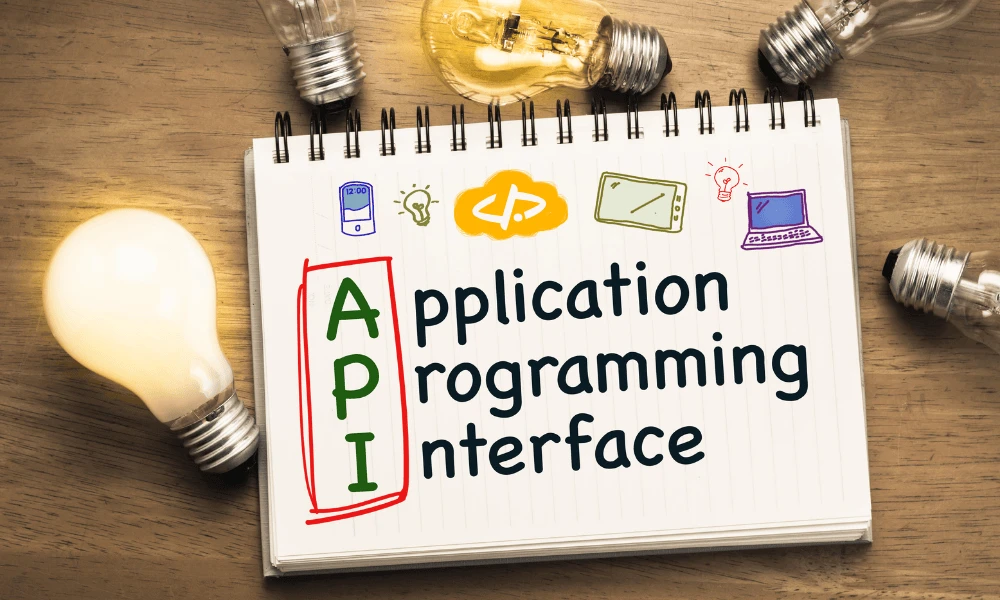
Table of content
Software rarely works in isolation. Your phone’s weather app pulls data from a national weather service, your online store takes payments through a third-party gateway, and your internal dashboard combines analytics from several platforms. Each of those connections runs through an API. So what is API development? It is the work of designing, building, securing and running those interfaces, and the early decisions (style, contract, security, versioning) decide whether an integration lasts for years or breaks with every release.
What Is an API?
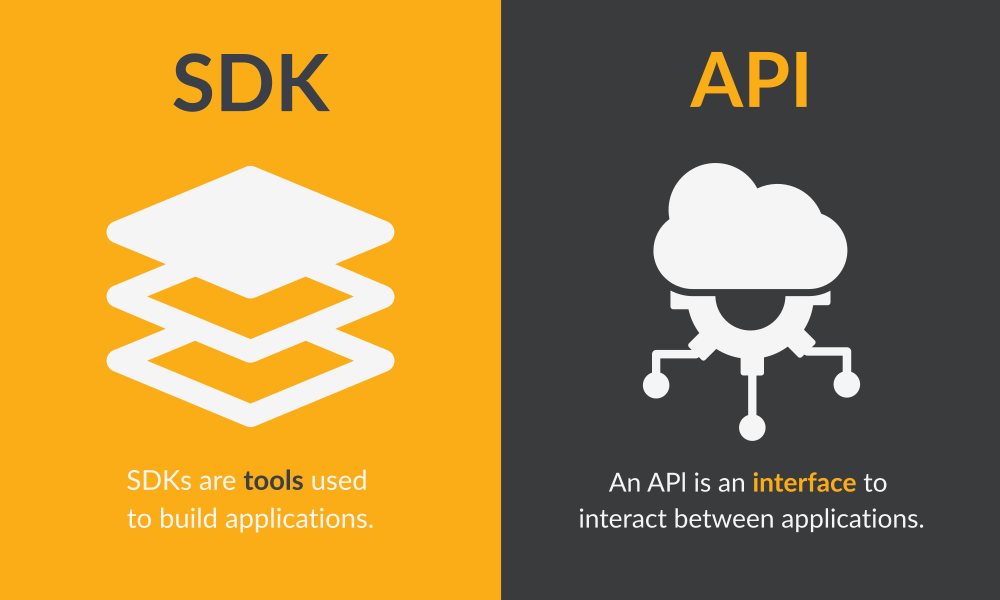
The API full form is Application Programming Interface. An API is a set of rules and definitions that lets one application request data or actions from another without knowing how the other is built. Knowing what is API development starts here, because every later design choice comes back to this definition. An API software development service exists to build these connections around your own data and processes.
Think of an API as a waiter in a restaurant. You (the client application) never enter the kitchen (the server). You read the menu (the documentation), order from the waiter (the API) and get your dish without learning how the kitchen works.
That interaction is governed by a contract. The API defines how one program can make a request to another: which endpoints exist, which data formats they accept, which errors they return and who is allowed to call them. Because the contract is written down, developers can integrate without touching the internals of the systems they connect.
What is API Development?
API development is the process of creating and maintaining Application Programming Interfaces, the messengers that let applications exchange data and trigger actions in each other. It covers four jobs: designing the contract (endpoints, payloads, errors), implementing it, protecting it with authentication and rate limits, and operating it through monitoring and versioning. Most teams now work contract-first: they write the interface description before the code, agree on it with its consumers, and generate documentation and client SDKs from that one file.
The Different Flavors: Exploring the Main Types of API
There is no single best API style. The choice depends on who calls the API and whether the caller needs an answer now or a notification later. These are the main types of API in a modern project.
REST is the default for public and partner APIs. So what is REST API design in practice? REST (Representational State Transfer) is an architectural style built on HTTP: resources live at URLs such as /orders/42, and standard methods (GET, POST, PUT, PATCH, DELETE) act on them. Each request is stateless, which makes a REST API easy to cache and scale. JSON is the usual payload, and HTTP status codes tell the client what happened.
GraphQL was developed at Facebook and released publicly in 2015; the GraphQL Foundation now maintains the specification. The client sends one query describing exactly the fields it wants, and a single endpoint returns that shape. This removes the over-fetching that mobile apps hit with a REST API. The cost lands on the server: caching is harder, and you need query cost limits so one expensive query can’t overload your database.
gRPC came out of Google in 2015 and is now a Cloud Native Computing Foundation project. It runs over HTTP/2 and uses Protocol Buffers, a compact binary format, with contracts in .proto files. It is fast and streams in both directions, so it suits service-to-service calls inside a microservices system, but browsers need a proxy to call it.
Webhooks reverse the direction. Instead of a partner polling your API every minute, your system sends an HTTP POST to the partner’s URL when something happens, such as a paid invoice. GitHub and Stripe, for example, let the receiver verify each webhook through an HMAC-SHA256 signature; senders should also retry with backoff, and receivers should ignore duplicates.
SOAP (originally Simple Object Access Protocol) is the older XML protocol with formal WSDL contracts. New SOAP APIs are rare, but many banking and telecom systems still expose one, so integration work often wraps SOAP behind a REST API.
| Style | Best fit | Main trade-off |
|---|---|---|
| REST | Public and partner APIs, CRUD over resources | Several calls for nested data |
| GraphQL | Mobile and web front ends with varied data needs | Harder caching, needs query cost limits |
| gRPC | Internal service-to-service traffic | Needs a proxy for browsers |
| Webhooks | Event notifications to partners | Receivers must handle retries and duplicates |
| SOAP | Legacy enterprise systems | Verbose XML, heavier tooling |
A newer consumer is the AI agent: protocols such as MCP let language models call tools that are usually thin layers over existing REST APIs. We compare the two approaches in MCP vs API.
A Practical Look: The API Development Lifecycle
Effective API development starts well before the first line of code. The aim is api software that other developers can adopt without a support call and that survives your next release.
- Planning and Design: Define the contract first. For REST, that means an OpenAPI document listing every path, parameter, schema, error and security scheme. The current version, OpenAPI 3.2, released in September 2025, adds support for the HTTP QUERY method, streaming responses such as server-sent events, and the OAuth 2.0 device authorization flow. Lint the file with Spectral, publish it with Swagger UI or Redoc, and run a mock server such as Prism so front-end and partner teams can start before the backend exists.
- Development and Implementation: Write the code against the agreed contract. When people ask what is API development in Java, the usual answer is Spring Boot; in .NET it is ASP.NET Core, in Python FastAPI, and in Node.js NestJS or Express. Generating stubs and client SDKs from the OpenAPI file keeps code and documentation in sync.
- Testing and Deployment: Combine unit tests, contract tests (Pact or schema validation against the OpenAPI file) that catch breaking changes, load tests with k6, and security scans. A simple API example: a request for the weather in “New York” must return a forecast, and a city that doesn’t exist must return a clear 404, not a 500. Deploy behind an API gateway such as Kong or Azure API Management, which handles TLS and rate limits in one place.
- Monitoring and Maintenance: Track latency, error rates and usage per client, ideally with OpenTelemetry traces that follow one request across services. Usage data shows which versions clients still rely on before you retire anything.
API Security Basics
The OWASP API Security Top 10 (2023 edition, still the current one) puts Broken Object Level Authorization first: an API that checks who you are but not whether order 42 belongs to you. Use OAuth 2.0 with the practices the OAuth 2.1 draft consolidates (PKCE for every client, no implicit grant), short-lived tokens and schema validation of every input. Rate limits should return HTTP 429 with a Retry-After header, and payment-style POST requests should accept an idempotency key so a retry never charges a customer twice.
Versioning Without Breaking Clients
Adding a field is safe; renaming or removing one breaks someone. Most public APIs put a major version in the path (/v1/), while Stripe pins each account to a dated version. Either way, announce retirement in the response: the Deprecation (RFC 9745) and Sunset (RFC 8594) headers tell client code that an endpoint is going away and when. Return errors in one format, such as Problem Details (RFC 9457).
Why Your Business Needs a Custom API Strategy
APIs are how data leaves a silo. A CRM that can’t share customers with billing, or a warehouse that partners reach only by CSV export, costs staff hours every week. An API strategy decides which systems expose what, and to whom, so new integrations reuse stable interfaces instead of one-off scripts.
A custom API makes sense when your business logic is the product: pricing rules, scheduling, risk scoring, or data that partners would pay to access. For a standard SaaS connection, an off-the-shelf connector or an API wrapper is often cheaper. Draw that line early, because an API that partners depend on is expensive to change.
The practical rule is to treat each API as a product with an owner, a contract, documentation and a deprecation policy. Diatom has built software for clients, mainly in North America and Western Europe, since 2004, with a team of 80+ senior engineers.
Conclusion
API development means building secure, documented interfaces that let software share data and functionality. Choose among the main types of API (REST, GraphQL, gRPC, webhooks or SOAP) based on who calls them, write the OpenAPI contract first, design authorization and versioning in from day one, and check real usage before changing anything.
Planning a new API or an integration between existing systems? Contact us to discuss your API development needs with our engineers.