
As we navigate 2026 and look beyond, the Apple platform development ecosystem is being fundamentally reshaped by deep AI integration and ambient computing. With the maturation of iOS 19, visionOS 3, watchOS 12, and macOS Tahoe, alongside refined developer frameworks like Swift 6.3, SwiftUI, and SwiftData, building software across Apple’s platforms is faster and more expressive than ever. Modern software development now heavily leverages Apple Intelligence, agentic coding models in Xcode, spatial computing experiences, and strict concurrency safety. This article explores the core technologies and modern practices shaping the future of custom iOS and multi-platform app development.

New Features for Development Teams
To leverage the full potential of Apple’s ecosystem, development teams must stay aligned with modern platform paradigms. The current Apple technology stack provides high-level abstractions, AI-driven developer tooling, and end-to-end cloud capabilities for building complex, performant applications. Key technologies shaping modern custom software development across Apple platforms include:
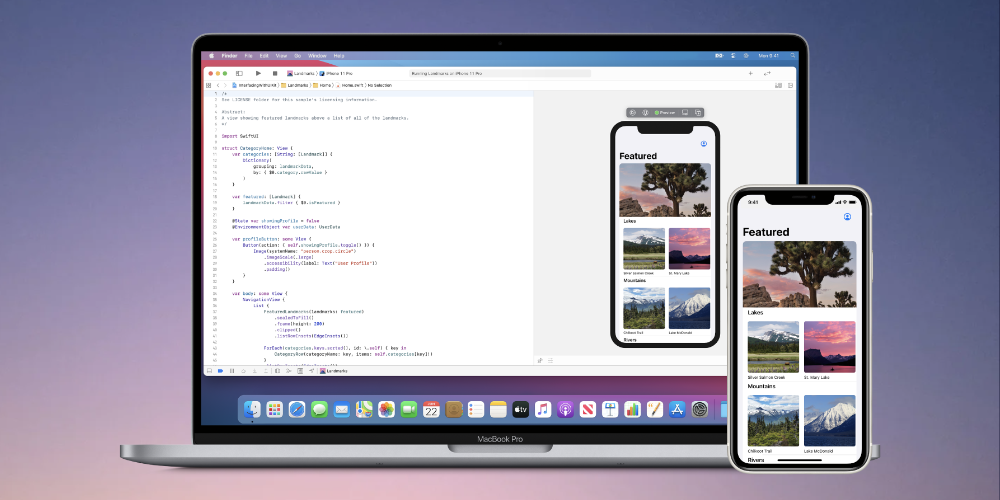
Xcode 17 & On-Device Predictive Intelligence: Xcode features deeply integrated AI coding agents and predictive code completion powered by Apple Silicon and leading LLM models. Developers can generate UI prototypes, perform automated refactoring, and debug issues directly within the source editor using native natural language assistant workflows.
Xcode Cloud: Apple’s continuous integration and delivery (CI/CD) service is a standard component of modern development pipelines. Deeply integrated into Xcode, it automates build, test, and App Store submission workflows in parallel, allowing teams to ensure continuous code quality with zero server setup.
Swift 6 Concurrency & Swift 6.3: Swift’s complete strict concurrency architecture ensures data-race safety by default across multi-threaded operations. Improvements in non-copyable types, C/C++ interoperability, and cross-platform capabilities allow developers to share safe core business logic seamlessly across client, web, and server environments.
SwiftUI & SwiftData: SwiftUI is the default declarative UI framework across iOS, iPadOS, macOS, watchOS, and visionOS. Paired with SwiftData—Apple’s Swift-native data persistence framework—developers can model, store, and sync persistent application state with minimal boilerplate, replacing legacy ORM patterns.
Spatial Computing with visionOS: App development frequently extends beyond 2D screens into spatial computing for Apple Vision Pro. Using SwiftUI, RealityKit, and ARKit, engineering teams can build shared spatial experiences, volumetric UI elements, and immersive environments that integrate fluidly into physical spaces.
Apple Intelligence & On-Device ML: Apple’s on-device foundation models and Foundation Models API enable developers to implement privacy-first generative text, image processing, and intelligent search indexing natively within custom apps without relying on third-party cloud architectures.
Metal 3 & MetalFX: Metal remains Apple’s low-overhead graphics API. Key features like MetalFX Upscaling, fast resource loading, and hardware-accelerated ray tracing allow developers to build visually intense, high-framerate graphics, games, and real-time rendering apps across Apple Silicon hardware.
There are also several new APIs available to Apple developers, including widgets on the lock screen, live text, collaboration tools, passkeys, MapKit, focus filters, automatic shortcuts, watchOS 9, RoomPlan, and live activities.
High-Level Technology Trends
Developers of iOS applications should watch for the following features to take advantage of the technologies listed above.
- One of these is 5G, the fifth generation of mobile connectivity, which offers faster speeds and lower latency. In the future, 5G will be the standard for mobile technology, enabling more features and possibilities for iOS mobile development.
- Artificial intelligence (AI)and machine learning (ML) are also important for iOS app development, as they allow for faster creation of new apps and can improve the performance of existing apps.
- Beacons, small wireless devices, also play a big role in iOS mobile app development as they can collect data in retail settings, allowing connected apps to send relevant information to customers.
- The Internet of Things (IoT) enables ordinary objects to send information to apps, allowing users to control or operate more items in their environment.
- Mobile commerce, or m-commerce, is becoming more popular, giving app developers opportunities to improve shopping experiences and increase revenue.
- Virtual reality (VR) and augmented reality (AR) allow users to immerse themselves in various experiences, offering new directions for apps in industries such as gaming, travel, and retail.
- Wearables, such as watches and clothing, can use apps to enable a variety of functions, particularly in industries like finance and healthcare.
Diatom Enterprises is an iOS development company offering custom software for the latest iOS products. Our software development team specializes in providing the most efficient iOS development services for various industries.
Please contact us for a free estimation of your planned project!